Parental mental load encompasses all the invisible tasks of planning, anticipating, and coordinating that structure a family’s daily life. Meals, clothing, medical appointments, managing activities: each micro-decision accumulates and eventually weighs on the available energy. Reducing this load relies less on generic advice and more on concrete methods tested on specific daily irritants.
Delegating planning to generative AI tools
Since 2023, more and more parents under 40 are using generative AI tools as personal assistants for family organization. Grocery lists, meal ideas tailored to allergies, Wednesday activity schedules, writing emails to school: these repetitive and time-consuming tasks lend themselves particularly well to partial automation.
The gain is not measured in hours saved, but in decisions eliminated from the mental queue. Formulating a request like “gluten-free weekly menu for two adults and a 4-year-old, with an associated grocery list” takes one minute. The result is not perfect, but it provides a modifiable base, which is always faster than starting from a blank page on Sunday night.
For families looking to deepen these organizational methods, it is possible to consult Parenting Advice for parents to find additional resources tailored to each age group.
The tool does not replace the parent. It removes the least gratifying part of parental work: the repetitive logistics. The time recovered can then go towards direct interaction with the child, where presence truly matters.
Micro-breaks for recovery to prevent parental burnout
A summary from the American Academy of Pediatrics dated 2023 highlights 5 to 10-minute micro-breaks as a concrete strategy for preventing parental burnout. These breaks require neither a babysitter nor a separate room: they can be practiced with the child nearby.
The principle is based on “fractionated self-care.” Rather than waiting for a one-hour slot that never comes, short sequences are inserted into the gaps of the day. The most documented formats include:
- 5-minute guided breathing while the child plays independently (a meditation app is sufficient, headphones on)
- Standing stretches during the warming of a bottle or cooking pasta, focusing on upper back tension
- Short seated meditation during the child’s nap, resisting the urge to “make the most” of this time with a household task
These practices reduce the risk of parental burnout and improve the quality of interactions with the child. The mechanism is simple: a less overwhelmed parent reacts with more patience to requests, which decreases conflicts and lightens the family atmosphere.
Time management in dedicated blocks for parents working remotely
The widespread adoption of hybrid remote work since 2020 has pushed many parents to structure their routines around clearly separated time slots. The principle of “deep work blocks” alternating with “child blocks” is documented in several OECD reports published between 2022 and 2023.
Specifically, this involves concentrating intense intellectual work during two time slots of the day (during nap time and school hours), then dedicating entire blocks to the children without professional screens in the background. The boundary is intentionally rigid.
This approach is associated with a decrease in the feeling of “doing everything at once” and a better parental satisfaction. The classic trap of parental remote work is the constant multitasking: responding to an email while keeping an eye on a child, neither truly available for work nor truly present for the child.

Adapting blocks to the child’s age
With a baby, deep work slots align with naps, the duration of which remains unpredictable. It’s better to plan short, segmentable tasks rather than a project requiring two hours of uninterrupted concentration.
With school-age children, the structure stabilizes. Homework can become a shared block at the end of the day, freeing the evening for family time without obligation.
Clothing and accessories management: reducing morning friction
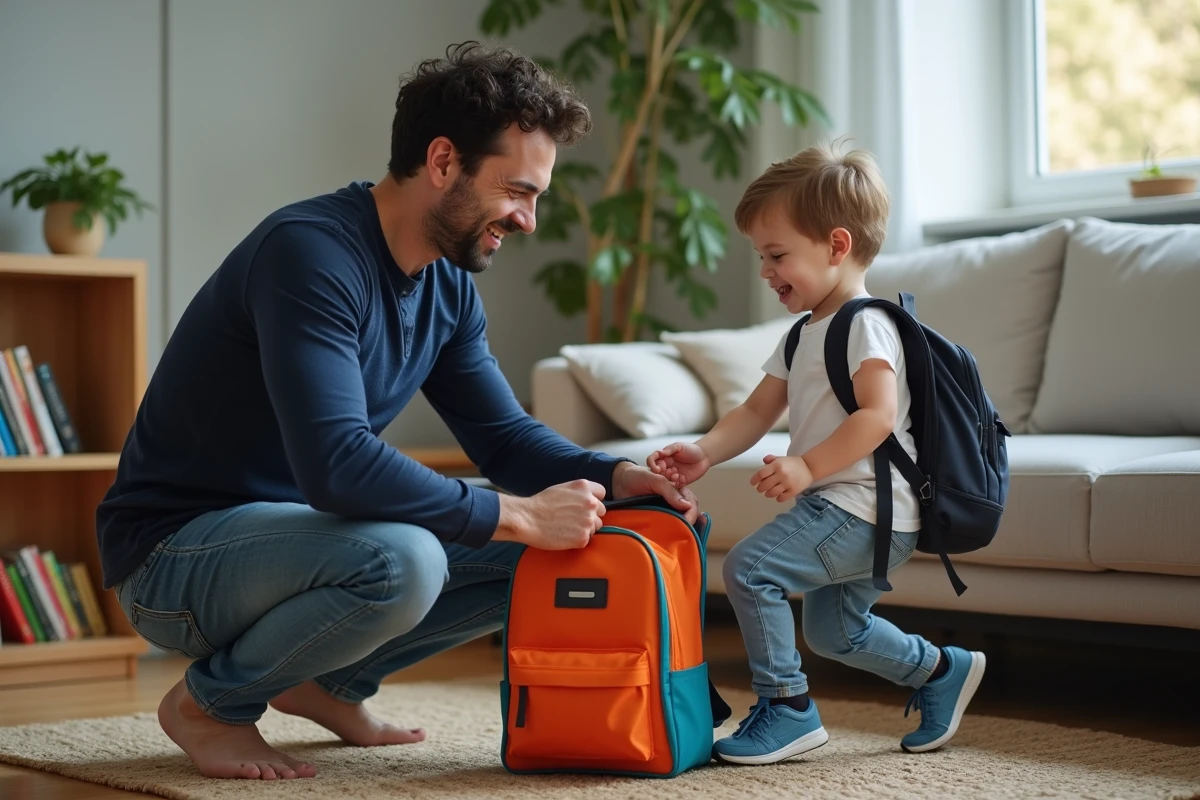
The choice of clothing in the morning is one of the most underestimated friction points in parental daily life. With young children, this step generates conflicts, delays, and disproportionate energy compared to its actual stakes.
Two methods can neutralize this problem:
- Preparing complete outfits the night before, involving the child in choosing between two options (no more, to avoid decision paralysis)
- Creating “weekly kits” on Sundays, with one outfit per day stored in a bin or numbered compartment, including clothing and accessories
- Sorting closets once a season to keep only current sizes, which eliminates hesitations in front of clothes that have become too small
Labeling clothing and accessories with the child’s name also reduces the time spent searching for lost items at daycare or school. It’s a one-time investment that eliminates a recurring source of stress.
Family meals: batch preparation as a time lever
Preparing meals for the week in one session (batch cooking) remains one of the most effective methods for families. The principle: cook in large quantities on Sunday, portion, and freeze or refrigerate for the week.
An advance-prepared meal eliminates the daily question of “what are we eating,” which alone represents a significant portion of the mental load associated with family care. The key is to choose recipes that reheat well and please the whole family, even if it means limiting variety in exchange for peace of mind.
For nights of extreme fatigue, having a “backup meal” consistently in stock (pasta, frozen homemade tomato sauce, grated cheese) prevents defaulting to fast food. This food safety net requires half an hour of one-time preparation and covers several emergencies.
The daily life of parents rarely lightens through a major change, but through the accumulation of small adjustments targeted at real friction points. Every automated or anticipated task frees up mental space for what matters: being present with the children, without the constant backdrop of a to-do list.