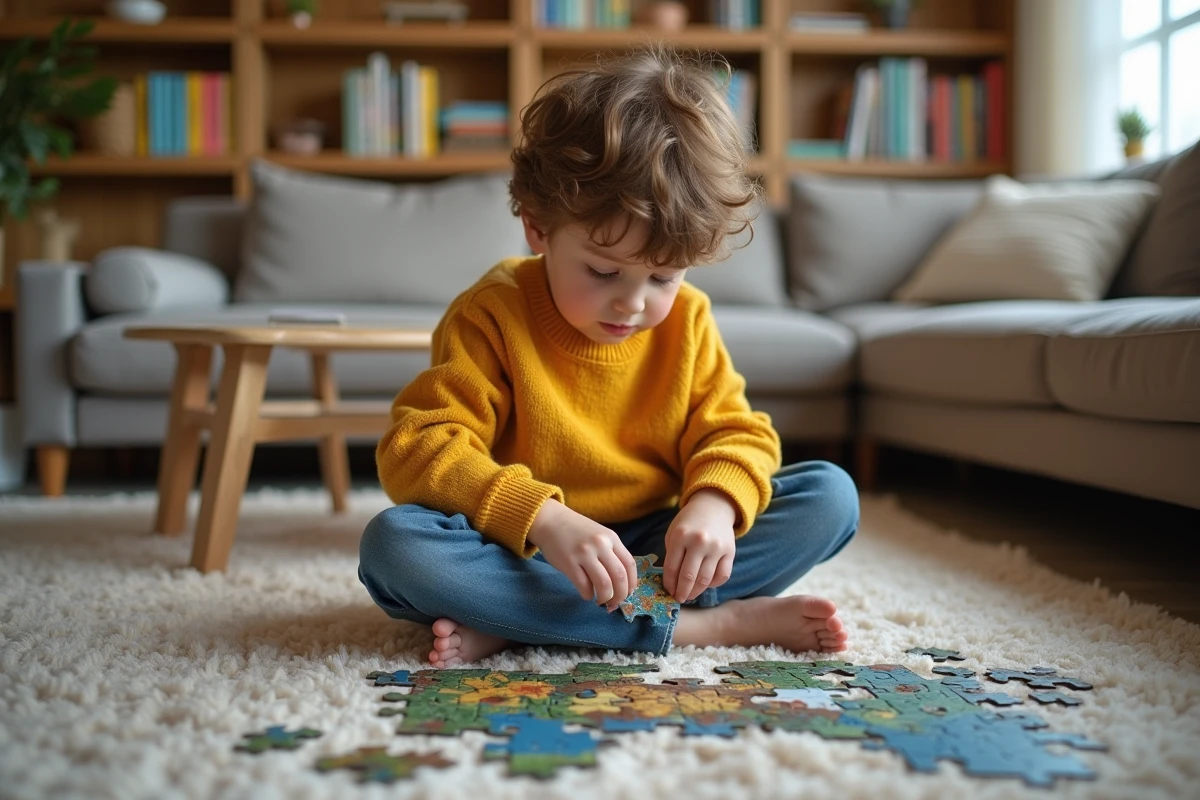
Some children solve complex puzzles well before the usual age, without having been introduced to or encouraged in this activity. However, this ability does not guarantee academic success or social ease. Early signs of talent often go unnoticed or are confused with mere passing fancies.
Supporting these children requires careful attention to their needs, both cognitively and emotionally. It also involves choosing tailored activities. Several resources exist to guide these unconventional paths and help prepare for kindergarten in the best conditions.
Identifying signs of early talent for puzzles in your child
Detecting a particular affinity for puzzles in a child means paying attention to their gestures and reactions over the days. Some little ones tackle puzzles well beyond the expectations for their age, completing complex assemblies while they should still be hesitating over basic shapes. Their visual memory is striking: they instinctively place the pieces, anticipate the final image, and can find a forgotten detail at a glance. To grasp the significance of this talent and deepen understanding, the article from Family 2 Family sheds light on the connection with the notion of giftedness or intellectual precocity.
Also take the time to observe how your child manipulates the pieces: the dexterity, speed, and precision with which they arrange each element indicate a fine motor skill well beyond the norm. These curious young ones do not hesitate to bypass the classical method to test other ways of proceeding. As soon as the challenge wears off, boredom sets in, and they demand a new complexity.
To better understand these profiles, some signs are particularly telling:
- Accelerated resolution of elaborate puzzles, unexpected for their age
- Remarkable perseverance and patience in the face of difficulties
- Open enjoyment of increasingly challenging puzzles, without fear of the challenge
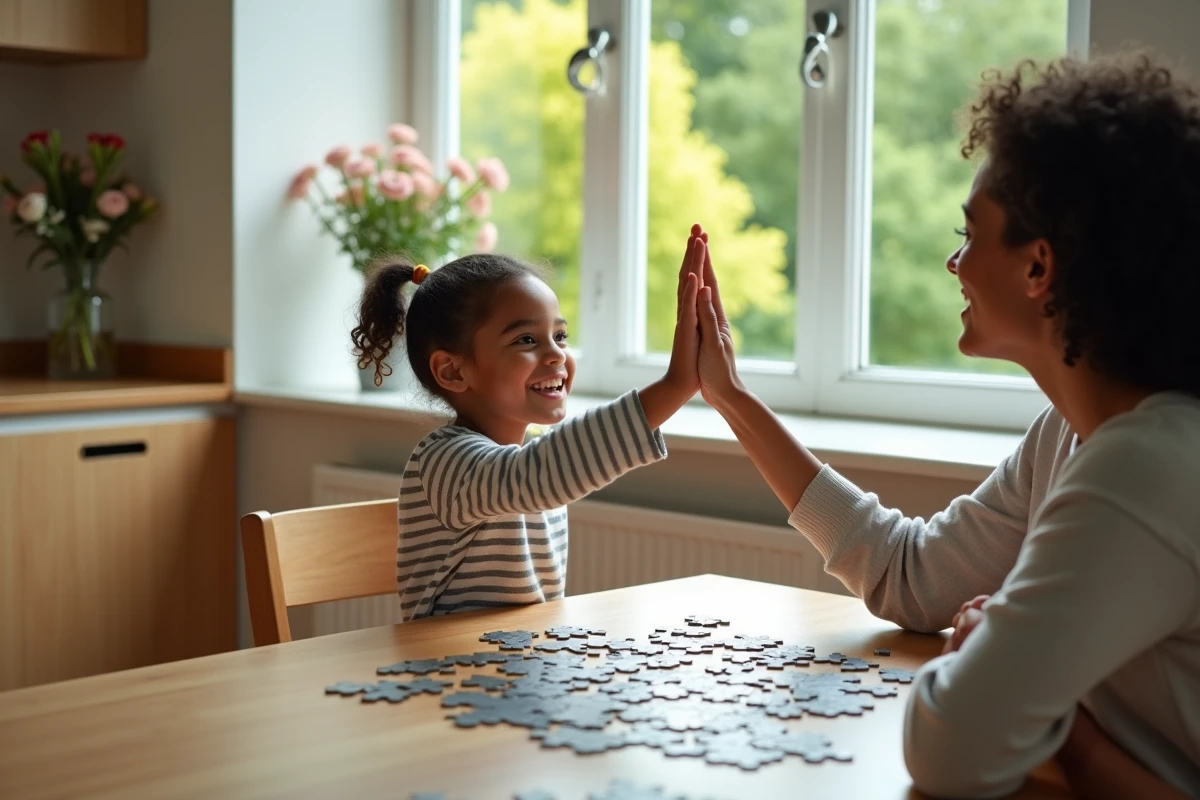
- Communicative joy and genuine pride upon success
In light of these behaviors, involving the school, communicating with the teacher, and, if necessary, consulting a specialized psychologist will ensure that the child has an adjusted environment that welcomes their specificities with discernment and kindness.
What Montessori activities and resources to nurture this passion according to age?
The Montessori approach, which values autonomy and active exploration, aligns perfectly with the thirst for learning of these children fascinated by puzzles. From kindergarten, prioritize wooden interlocking puzzles: their manipulation refines coordination and spatial judgment. Gradually introduce progressive assembly games and brain teasers to maintain creativity, structured thinking, and the joy of challenge.
To adjust the difficulty, observe the child’s age, patience, and ease: the number of pieces, format, and represented universe should be adapted. Around 3 or 4 years old, 3D puzzles or those with complex patterns open new horizons, enhance spatial awareness, and stimulate memory. Themed puzzles, such as animals, numbers, and letters, keep motivation intact, fitting well both at home and in class.
To enrich activities and offer a varied palette of games, here are some concrete examples to propose regularly:
- Cooperative board games, like The Orchard or Piratatak: working together to solve problems and learning to wait for one’s turn
- Tangram and more elaborate construction games to exercise creativity, logic, and a sense of experimentation
Multiply the supports: puzzle books, sensory puzzles, mosaics… Varying the modes of play sharpens curiosity, nurtures enjoyment, and fosters new learning.
Preparing calmly for the school year: practical tips for supporting a puzzle-loving child
When the school year begins, the passion for puzzles can sometimes turn into a source of apprehension. This taste for complexity highlights a well-awakened intellectual curiosity and a fine motor skill that far exceeds the average. The involvement of close ones becomes precious: it is important to communicate with the teacher, present the child’s successes, but also to discuss the risk of boredom if the proposed activities do not stimulate them.
An adapted corner at home, calm and well-equipped, helps the child refocus and continue their exploration. Plan a selection of varied puzzles that are accessible, alternating with logic games such as chess, checkers, or go. Playing with a diversity of exercises helps maintain enthusiasm and reduce the stress inherent in the change of school rhythm.
Finally, be attentive to expectations. Some children, especially those with high potential, experience novelty with heightened intensity. Valuing tenacity, listening without interruption, and emphasizing the journey rather than just the result: this is what allows each child to find their balance. Preparing the backpack together, slipping in two or three favorite puzzles, then becomes a reassuring ritual, an anchor for facing newness calmly.
Opening the way for a puzzle-loving child means shaping a field of experiences where each victory nourishes the next. An endless adventure, driven by the love of play and the desire to always take on new challenges.