Climate projections for 2050 do not describe a single future. They outline several trajectories, the outcome of which depends on the decisions made between now and the mid-2030s. The question is no longer whether the climate will change, but to what extent the consequences will diverge based on territories, income levels, and political choices.
Global warming in 2050: what the IPCC scenarios measure
The latest IPCC scenarios indicate that the planet is heading towards a minimum increase of +2 °C in average global temperatures compared to the period 1850-1900, as early as 2040. By 2100, a warming of +3 °C seems more likely if current policies do not change radically.
Europe is warming faster than the global average. The climate of cities like Liège could, by the end of the century, resemble the current climate of Toulouse. This data illustrates a concrete geographical shift: the seasonal markers that millions of people are accustomed to will shift southward.
Understanding what the world will look like in 2050 requires distinguishing between optimistic scenarios, where emissions decrease rapidly, and trend trajectories where commitments remain insufficient. The table below summarizes the major differences between these two trajectories.
| Parameter | Strong mitigation scenario | Trend scenario |
|---|---|---|
| Temperature increase (2050) | Close to +1.5 °C | +2 °C or more by 2040 |
| Urban heat stress | Limited to tropical areas | Extended to subtropical and temperate cities |
| Droughts and floods | Increased frequency but manageable | Multiplication of extreme events |
| Urban mobility | Widespread 15-minute cities | Slow transition, dependence on cars |
| Biodiversity | Slowed losses | Accelerated species extinctions |
Two social planets in 2050: climate resilience and economic fracture
The GEO-7 report from the United Nations Environment Programme (UNEP) describes a future where oppressive heat, species extinctions, and air pollution primarily impact the least protected populations. This observation leads to the consideration of not just one future, but two parallel realities coexisting on the same planet.
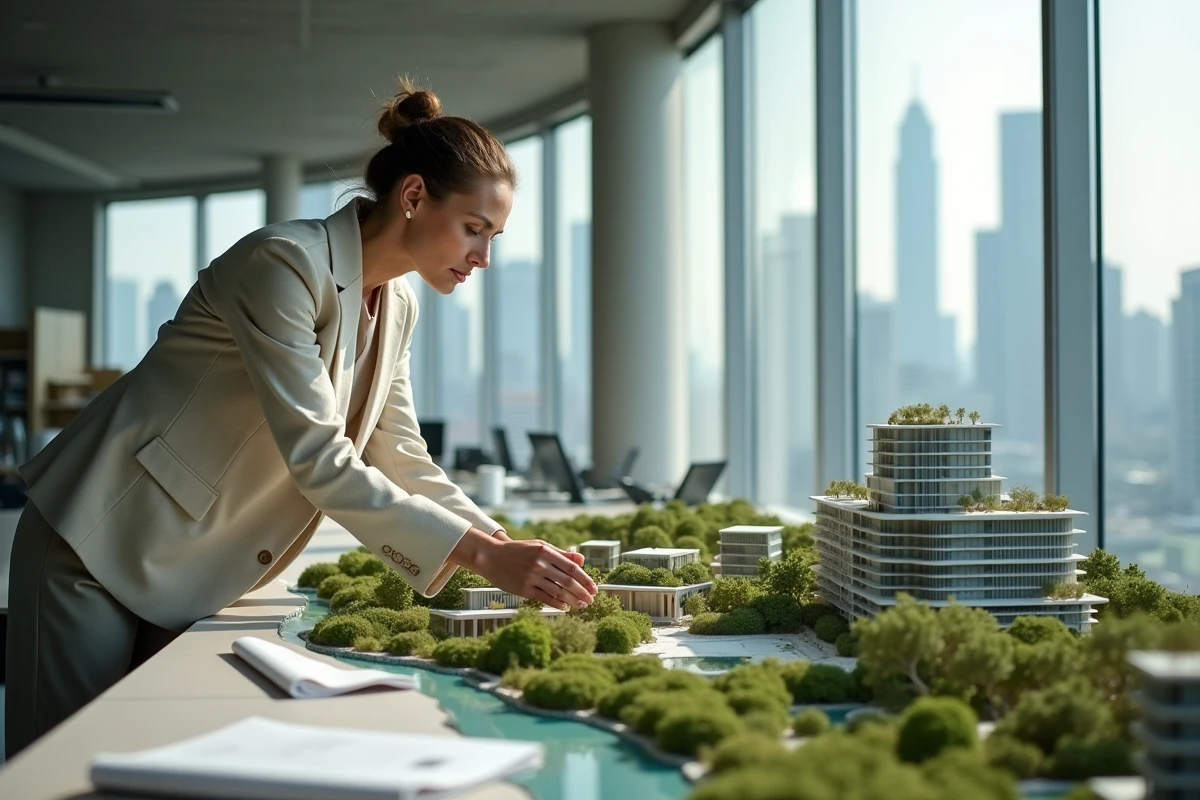
The archipelago of resilient metropolises
In major cities of high-income countries, the technological and political choices made between 2020 and 2035 are already producing effects. Widespread low-traffic zones, very low energy consumption buildings, air conditioning powered by decarbonized networks: these metropolises absorb thermal shocks through massive investments in adaptation.
Several urban studies show a global trend towards the 15-minute city in wealthy metropolises and some Chinese or Latin American cities. The modal share of cycling and walking is already increasing, reducing the use of individual cars in city centers. By 2050, these neighborhoods will resemble enclaves where daily life remains comfortable despite warming.
Exposed territories without a safety net
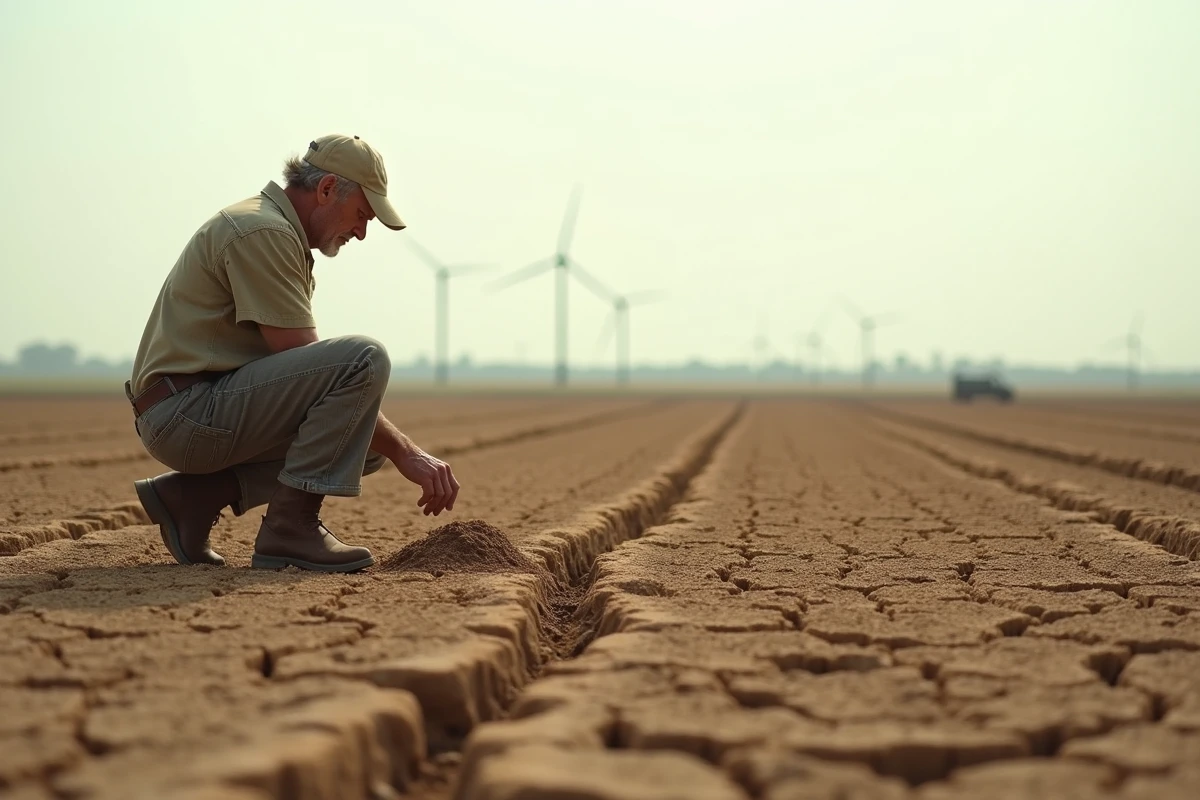
In contrast, a large part of the global population, concentrated in Africa and Southeast Asia, will live under chronic heat stress before 2050. Days exceeding health risk thresholds are multiplying in major tropical and subtropical cities, without local infrastructures to protect against them.
Risks are not limited to heat. Floods, prolonged droughts, and degradation of agricultural land affect regions already fragile economically. The divide does not run monolithically between Northern and Southern countries: it also cuts across national territories, between connected urban centers and neglected rural or peri-urban areas.
Environment and biodiversity in France: what regional impacts by 2050
France is not exempt from this polarization. Regional climate projections depict a territory where summer droughts and extreme heat episodes become the norm in the south, while the north experiences more frequent flooding linked to intensified winter precipitation.
The adaptation measures planned by European governments follow a precise timeline:
- Gradual phase-out of oil and gas boilers in new buildings, aiming for nearly zero-energy buildings by 2050.
- End of net land artificialization (the “stop concrete” goal) to preserve land absorption capacities and limit flood risks.
- End of sales of the most polluting thermal vehicles, accelerating the transition to electric or hydrogen fleets.
These measures remain insufficient if not accompanied by a redistribution of resources. Rural French municipalities, facing water scarcity and declining agricultural yields, do not have the same investment capacities as regional metropolises.
Political choices 2025-2035: the window that determines the 2050 scenario
The authors of the GEO-7 report assert that the worst forecasts can still be avoided if countries act quickly. The window for action is within this decade. Each year of delay in emission reductions pushes back the warming peak and exacerbates the consequences for the following decades.
The least visible parameter in global scenarios remains the capacity of societies to equitably distribute the costs of adaptation. A city that invests in greening, heatwave alert networks, and thermal renovation protects its inhabitants. A territory that cannot afford this faces the same warming with far heavier health and economic consequences.
The planet of 2050 will not be uniform. The climate is changing everywhere, but the means to adapt to it diverge radically. It is in this gap between adaptation capacity and exposure to risks that the true geography of the future will unfold.