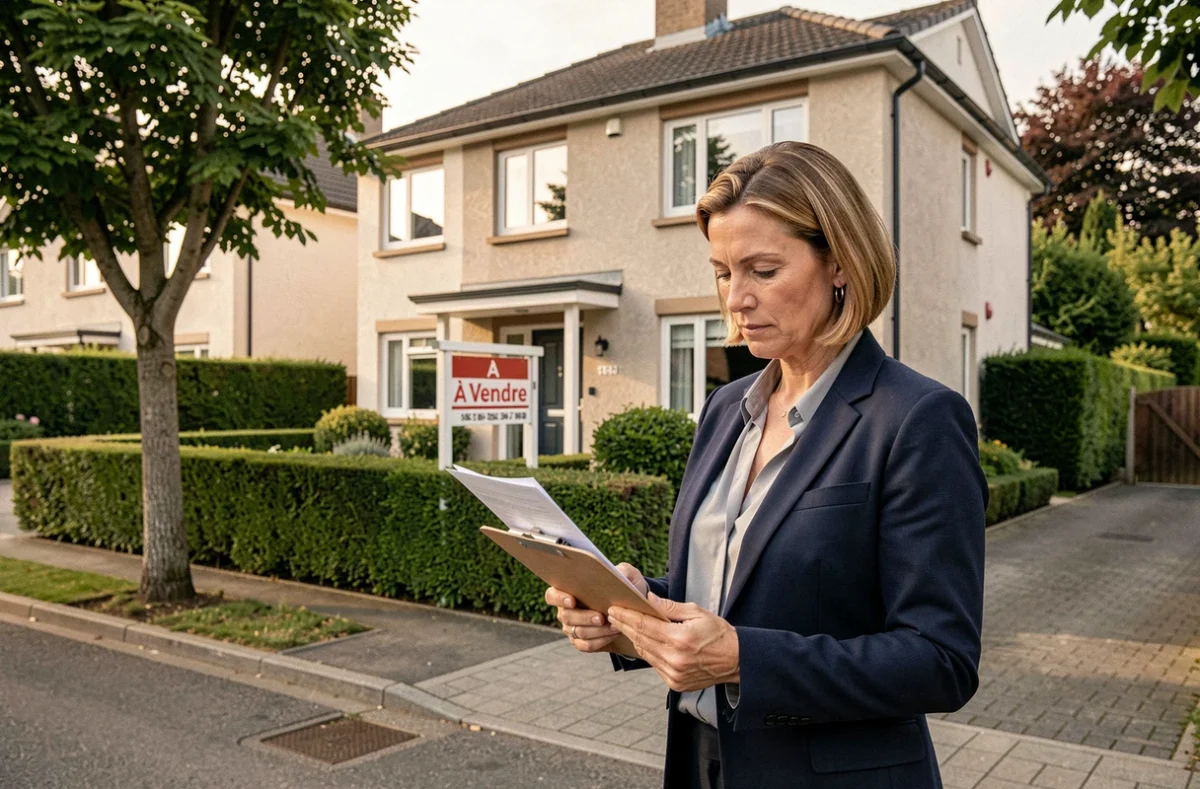
Selling a property is not just about setting a price and waiting for offers. The difference between a decent sale and a truly profitable one often lies in the preliminary decisions regarding technical and tax matters that many sellers discover too late. The capital gain from real estate, meaning the difference between your purchase price and your selling price, can vary by several tens of thousands of euros depending on how well the file is prepared.
Energy audit and DPE: two documents that impact the selling price
You may have noticed that two similar properties in the same neighborhood can sell for very different prices? One of the main reasons, in 2026, is the displayed energy performance.
According to SeLoger data cited by Le Nouvel Économiste, a property rated F or G sold for about 15% less than a comparable property rated D in 2025. A few years earlier, this gap was no more than 7 to 8%. The trend is intensifying.
In practical terms, the energy performance diagnosis (DPE) is no longer just a simple administrative document. It has become a negotiation tool for buyers. A poor DPE systematically pushes the price down, while a good rating reassures and limits negotiation margins.
Since January 1, 2025, an energy audit is mandatory for individual homes and single-owner properties rated E, in addition to those rated F and G. This document, carried out at the seller’s expense, must be provided from the first visit. It presents at least two costed renovation scenarios. In other words, if you do not anticipate this point, you may discover an unexpected cost that delays the entire marketing process.
For those who wish to delve deeper into value-enhancing levers before putting a property up for sale, it is possible to learn more on Proximmo Net about strategies tailored to each type of property.

Targeted renovation work: where to invest to maximize capital gains
Not all renovations are equal in terms of return on investment. The classic trap is to renovate what you like rather than what adds value to the property.
Insulation and heating system as a priority
Improving the DPE through insulation work (attics, walls, windows) or replacing the heating system produces a double effect. The property moves up in energy class, which reassures the buyer. And the seller avoids the depreciation of 10 to 15% applied to energy-inefficient properties.
A property that moves from class F to class D can regain a significant portion of its value, sometimes well beyond the cost of the renovations undertaken. Energy renovation aids (MaPrimeRénov’, energy savings certificates) also reduce the net bill for the owner.
Kitchen, bathroom, and living space
Aside from energy, three areas offer a good return:
- Renovating the kitchen, the room most often scrutinized by the majority of buyers, especially if the existing one is over fifteen years old.
- Updating the bathroom, which eliminates a common psychological barrier for buyers who are reluctant to plan for renovations upon moving in.
- Converting attics or creating an extension, which increases the living space and thus the overall price per square meter of the property.
An additional square meter remains the most direct capital gain lever, provided that local urban planning rules are respected and the created areas are declared.
Asking price: why overvaluation is costly
Le Nouvel Économiste noted in September 2026 that negotiation has become almost systematic in the real estate market. Buyers compare, wait, and negotiate. A property initially overvalued does not receive offers, stagnates on listings, and ultimately sells for below its actual value after several price reductions.
The right approach is to set the price based on recent comparable transactions in the same area, not on displayed prices. The difference is significant: the prices listed in ads are often several points higher than the prices actually signed at the notary.
A seller who aligns their price from the start attracts more qualified visits in the first weeks, a period when the visibility of the listing is at its peak. After a few weeks without an offer, the algorithms of real estate portals naturally downgrade the listing.

Taxation of capital gains: deductions and exemptions to know
The gross capital gain (selling price minus purchase price) is not what you will actually pocket. The tax system takes a share that can reach 34.5%, consisting of 19% income tax and 15.5% social contributions.
Two mechanisms reduce this bill:
- Total exemption for the primary residence: if the property sold is your primary residence on the day of the sale, no capital gains tax applies. This is the most common and advantageous case.
- Deductions for duration of ownership: starting from the sixth year, a growing percentage reduces the taxable base. Total exemption from income tax occurs after 22 years of ownership, and from social contributions after 30 years.
- Increase in the acquisition price: notary fees, agency commissions paid at the time of purchase, and certain renovations can be added to the acquisition price, which mechanically reduces the taxable capital gain. Keep all your invoices.
Each additional year of ownership lightens the tax burden, making the timing of sale strategic. Selling six months too early can cost several thousand euros in avoidable taxes.
The tax calendar, the nature of the property sold (primary or secondary residence, land, commercial premises), and your personal situation radically change the calculation. A seller who prepares their sale by incorporating these parameters from the outset retains a much larger share of their capital gain than one who discovers the tax implications at the time of signing.