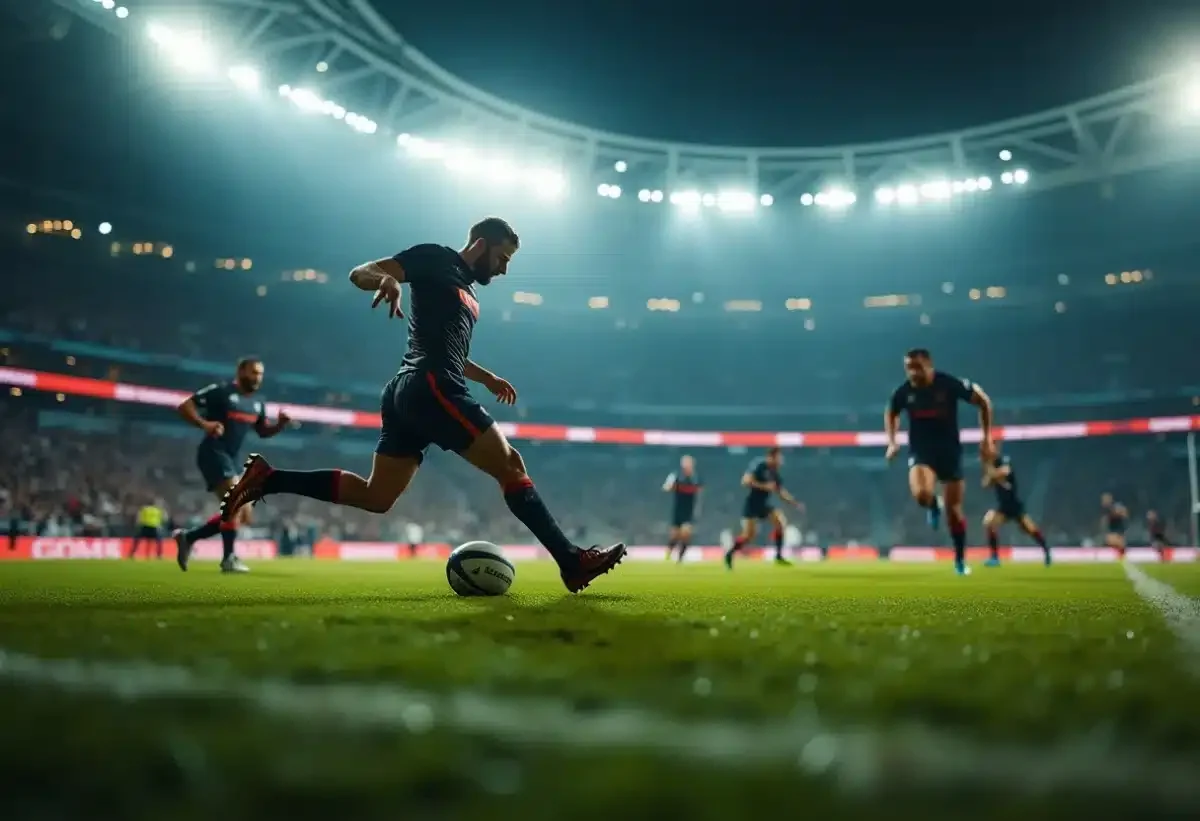
Rugby, this noble and intense sport, reveals itself in a thousand facets from the kickoff. The players, like modern gladiators, commit body and soul to every scrum, every ruck, every pass. Strategies take shape, tactics refine, and every second counts.
The tension rises as the clock ticks down. Supporters hold their breath during crucial penalties or tries. The final moments of a match are often the most thrilling, where the endurance and determination of the teams are put to the test. Every minute on the field is a concentration of emotions and strategy.
The key moments of a rugby match
Rugby is a sport where every moment can change the course of the game. The duration of a rugby match revolves around several key moments that dictate the intensity of the encounter.
Kickoff
The kickoff marks the beginning of each half and is initiated by the referee. This moment is fundamental as it sets the stage for the game. The kickoff can be:
- Short kick: the ball is kicked with less power
- High kick: the ball is sent very high
Try and restart kick
A try, a moment of glory for a team, occurs when the ball is grounded in the opponent’s in-goal area. The restart kick follows a missed or successful try and is taken from the 22-meter line by the defending team.
Scrum and lineout
The scrum is played at the center of the field if the kickoff does not comply with the rules. It can also follow a penalty. The lineout occurs when the ball goes out of bounds without touching the ground or a player.
Penalty
Failure to comply with the kickoff rules or phases of play can result in a penalty in favor of the opposing team. A penalty can change the outcome of a match, hence its strategic importance.
Each phase of play, from the kickoff to the lineout, including the try and scrum, structures the duration of a rugby match and determines its outcome.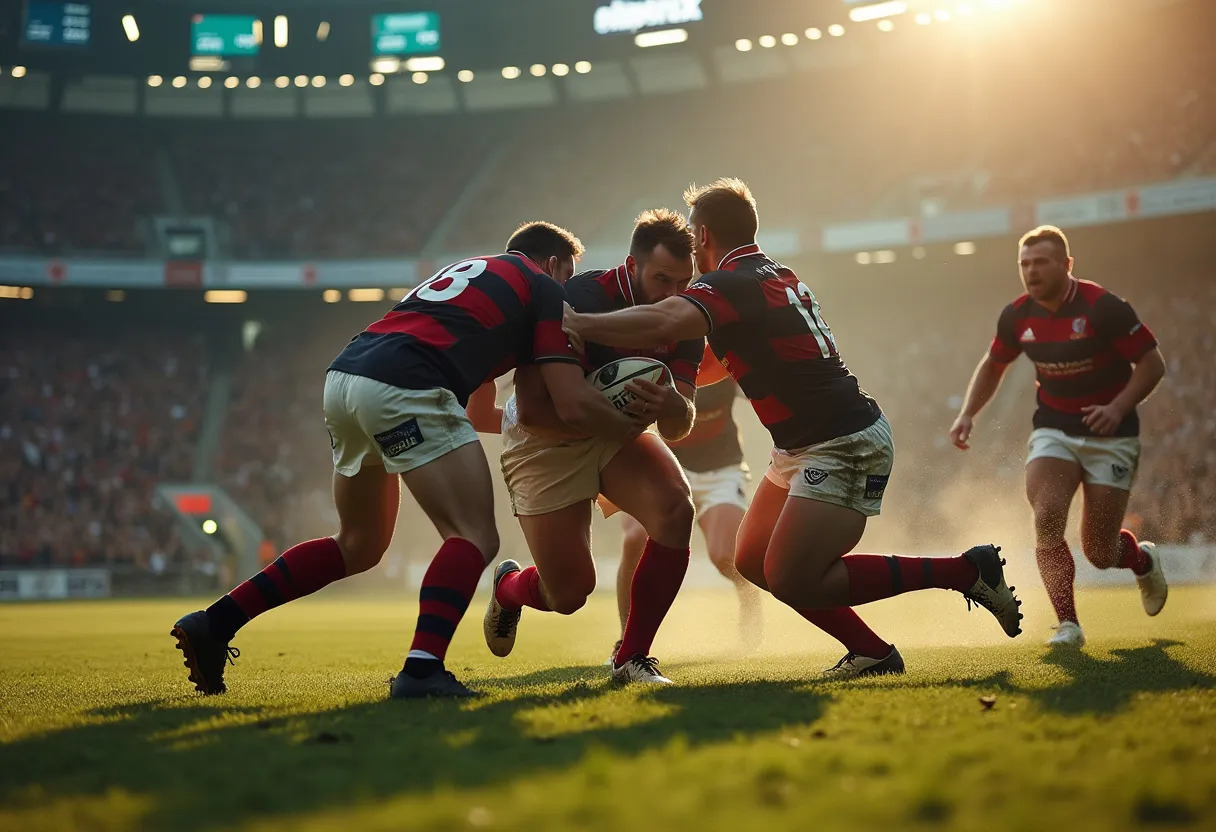
Strategies and tactics until the last second
Mastering strategies and tactics is essential for every rugby team. The decisions made on the field, often in real-time, can change the outcome of a match.
Field management
Understanding the different zones of the field is fundamental. The 22-meter line marks the restart area for the defending team, while the 10-meter line requires opponents to wait for the kickoff behind this line. The halfway line is the central point of each half’s start. The in-goal area is the ultimate objective for scoring a try.
Kicking
Rugby uses various kicks to control the game. The restart kick, taken from the 22-meter line, resumes play after a missed try. Tactical kicks, such as the drop goal or clearance kick, allow teams to gain ground or score points.
Qualifying rounds and quarter-finals
The qualifying rounds and quarter-finals require adjusted strategies. Teams must optimize ball possession and execute coordinated movements to destabilize the opponent. Video refereeing, used to check disputed tries or fouls, adds a dimension of precision and fairness.
The last second
Every second counts in a rugby match. Teams must remain vigilant and ready to react until the final whistle. A last push, a well-executed scrum, or a precise kick can decide the winner. Rugby, a sport of endurance and strategy, demands technical skills and game vision until the very last second.